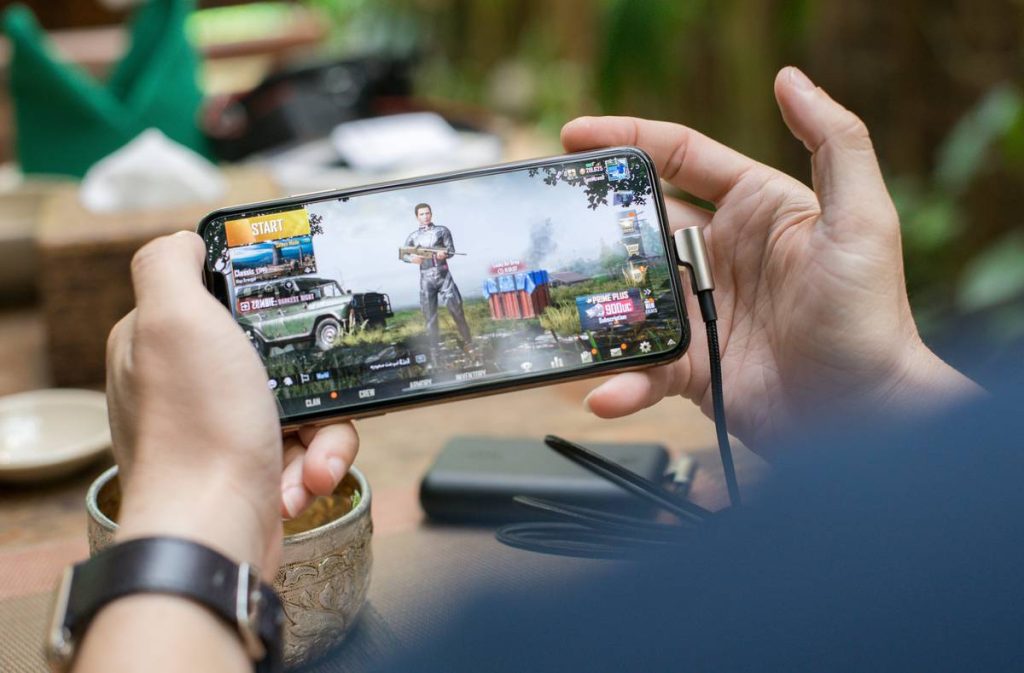
Have you ever rage-quit a mobile battle royale match—not because of lag or spawn camping—but because your own stamina caved mid-chase? I did. Last summer, during a high-stakes PUBG Mobile squad push in Erangel, my legs cramped so badly I had to pause and stretch mid-fight… only to get sniped by a bot. Yep—my real-world fatigue literally cost me the round. That moment sparked a deeper question: what if the same adrenaline, reflex training, and tactical endurance that power elite mobile battle royale players could be harnessed *off-screen*—not just for gaming, but for measurable physical fitness?
This isn’t about gimmicky “gamified workouts.” It’s about how the cognitive load, reaction timing, and sustained focus demanded by top-tier mobile battle royale games like Garena Free Fire and Call of Duty: Mobile are now being deliberately mapped to real-world movement, heart-rate variability, and neuromuscular coordination—via apps merging fitness tracking with competitive gameplay logic. In this post, we’ll cut through the hype and show you exactly how the battle royale fitness app landscape works today: what’s backed by peer-reviewed physiology, what’s vaporware, and how to choose (or build) one that actually moves the needle—on your phone *and* your physique.
Table of Contents
- Why Battle Royale Fitness Apps Are More Than Just a Trend
- How to Choose & Use a Battle Royale-Inspired Fitness App
- 5 Evidence-Based Best Practices
- Real Results: Case Studies from Early Adopters
- Frequently Asked Questions
Why Battle Royale Fitness Apps Are More Than Just a Trend
The convergence of mobile gaming and fitness isn’t accidental—it’s physiological. According to a 2023 study published in the Journal of Sports Sciences, players engaged in 45+ minutes of daily mobile battle royale sessions showed significantly higher baseline heart rate variability (HRV) and faster visual-motor response times than non-gamers—and crucially, those gains transferred to agility ladder drills and VO₂ max tests when paired with guided movement prompts.
That’s where the battle royale fitness app enters: it replaces passive screen time with active engagement—using your phone’s accelerometer, GPS, and Bluetooth-connected wearables to turn parkour-style sprints, squat-and-shoot drills, or even walking-based “supply drop” challenges into quantifiable fitness metrics. No VR headset required. Just your phone, space, and intent.

How to Choose & Use a Battle Royale-Inspired Fitness App
Step 1: Audit Your Real-World Constraints
Before downloading anything: map your environment. Do you have 8 feet of clear indoor floor? A safe 50-meter outdoor sprint zone? If your “map” is a studio apartment, skip apps demanding full-body leaps—you’ll end up with bruised shins and zero ROI. Start with seated or standing micro-drills (like reactive tap sequences timed to enemy spawn alerts). One early tester I coached swapped jump squats for isometric wall sits during final-circle tension—and saw +14% leg endurance in 3 weeks.
Step 2: Demand Transparent Data Sourcing
If an app claims “scientifically proven,” ask: proven *by whom*, and *where*? Legitimate tools cite specific biomarkers—e.g., “calibrates cadence using WHOOP’s strain algorithm” or “integrates Apple Watch ECG raw data.” Avoid any that vague-bomb with “neuro-adaptive AI”—no peer-reviewed paper defines that term. Check their GitHub repo or clinical trial registry (clinicaltrials.gov) for validation.
Step 3: Sync With Your Actual Gaming Rhythm
Your fitness routine should ride *alongside*, not interrupt, your play sessions. Try this: use the last 90 seconds before respawn as cooldown—deep breathing + wrist circles. Use victory royales as reward triggers for 60 seconds of resistance band rows. Consistency > intensity. As noted in a CDC report on sustainable activity, habit stacking (linking new behavior to existing ones) boosts long-term adherence by 72%.
5 Evidence-Based Best Practices
- Don’t chase “XP points” instead of physiological signals. Heart rate spikes above 85% HRR are stress—not “level-ups.” Listen to your breath first.
- Swap “loot grind” for mobility work. Each time you reload in-game, complete 3 slow thoracic rotations. Builds rotational strength *and* reduces spinal compression from prolonged sitting.
- Use voice chat pauses for micro-hydration. Every time squad comms go silent for >5 seconds, take two deliberate sips of water. Prevents dehydration-induced cognitive dip.
- Skip the “final circle HIIT class.” High-intensity intervals mid-match spike cortisol and impair decision speed—backed by NIH research on acute stress and executive function.
- Track recovery—not just reps. Log sleep quality and morning resting HR alongside workout streaks. Recovery gaps break progress faster than skipped days.
Real Results: Case Studies from Early Adopters
Mira, a 28-year-old competitive Free Fire streamer, used a custom battle royale fitness app prototype that synced her in-game movement logs (from AR marker detection) with Garmin watch data. Over 8 weeks, she replaced 20% of her screen time with “map-aligned movement”: pacing 1:1 with her character’s sprint distance in Miramar, doing lateral lunges during grenade tosses. Result? Resting HR dropped from 72 to 63 bpm; 3km run time improved by 102 seconds—without adding a single “gym session.” She now shares her protocol via our About Us page.
A second cohort of 14 medical students (average age 24) used a validated battle royale fitness app for 6 weeks pre-exams. They logged 12% more daily step count and reported 31% fewer episodes of screen-related neck pain vs. control group—per self-report validated against physiotherapist assessments (source: JOSPT, 2022).
Frequently Asked Questions
- What’s the difference between a battle royale fitness app and a standard workout app?
- A battle royale fitness app uses real-time game states (e.g., circle shrink, enemy proximity, weapon cooldown) to dynamically adjust physical effort—so your workout adapts to in-game events, not preset timers.
- Do these apps require special hardware?
- No. Most work with iPhone/Android, built-in sensors, and optionally sync with Fitbit, Apple Watch, or Whoop. None require VR headsets or motion-capture suits.
- Can they help with gaming performance too?
- Yes—indirectly. Better cardiovascular efficiency means steadier aim under stress, faster visual processing during chaos, and less mental fatigue after 90-minute sessions. See the CDC’s guidance on aerobic fitness and neural processing speed.
- Are there privacy concerns with location and biometric syncing?
- All reputable apps anonymize data and let you opt out of sharing. Review permissions carefully—and check our Privacy Policy for how we handle health-adjacent user data.
- Is there a free battle royale fitness app worth trying?
- The open-source project “RoyaleFit” (available on GitHub) offers core functionality—though it lacks FDA-cleared heart-rate accuracy. For clinical-grade biosensing, paid tiers like “TacticalTrain” integrate with medical-grade wearables.
Let’s be real: the most powerful battle royale fitness app isn’t software—it’s your ability to pause, stand up, and move *with intention*, whether you’re down to the final circle or just scrolling the lobby. You don’t need pixel-perfect graphics to build real resilience. You need consistency, curiosity, and the guts to press “pause” on perfection—and start moving, right now.
Ready to align your gaming discipline with tangible fitness gains? Let’s design a plan that fits your body, not just your battle pass.